






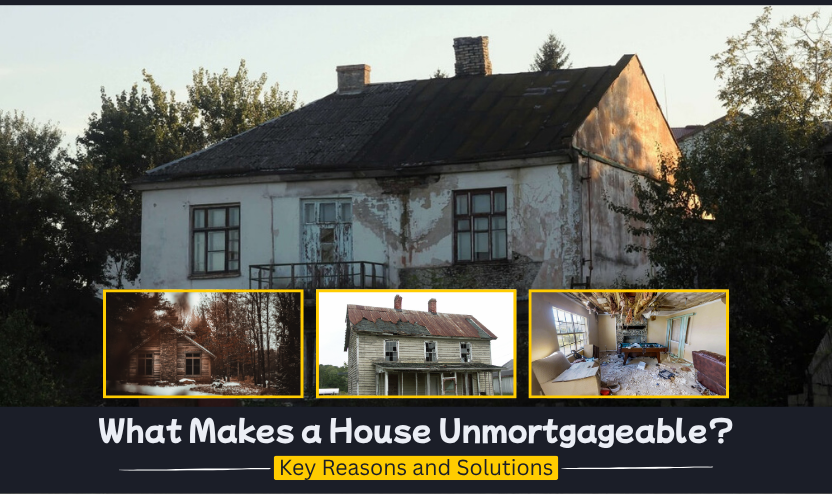
Facing trouble selling? Discover why your house might be unmortgageable and how to sell fast!
Selling a house is often seen as a straightforward process, but for many property owners, complications can arise that make the transaction far more challenging. One of the most significant hurdles a seller can face is when the property becomes unmortgageable, making it difficult or even impossible for buyers to secure financing through a traditional mortgage. Understanding the reasons behind this and the best ways to navigate these challenges can make a significant difference in the speed and success of your sale.
In this blog, we explore the primary reasons why a house may be considered unmortgageable and provide solutions for homeowners looking to sell their properties. At Xtreme Properties, we specialize in helping property owners sell their homes, whether they are facing issues like structural damage or financial roadblocks.
What Makes a House Unmortgageable?
A house becomes unmortgageable when it has issues that prevent a lender from offering a mortgage loan to a potential buyer. Lenders are hesitant to approve loans for properties that are in poor condition, have legal issues, or fail to meet basic requirements. Below are the key factors that can make a property difficult to mortgage:
1. Structural Issues
Structural damage, such as subsidence or foundation problems, can make a property unmortgageable. If the house has significant issues with its foundations, walls, or overall structure, lenders will be reluctant to approve a mortgage. Even if the problem is resolved, potential buyers must disclose this information to the lender, which can result in complications or outright rejection.
2. Non-Standard Construction
Properties built using non-traditional methods, like prefabricated homes or Pre-Reinforced Concrete (PRC), are often deemed unmortgageable. These homes may not meet traditional lending standards, and some lenders may require a PRC certificate for approval. If you’re looking to sell a non-standard property, we can help you sell quickly and hassle-free.
3. Japanese Knotweed
Japanese knotweed is a highly invasive plant that can cause significant damage to a property’s structure. If a property is infested with this weed, it can destabilize walls, foundations, and other critical parts of the home. Mortgage lenders often require proof of professional treatment and a COSHH assessment before approving a loan for a property affected by Japanese knotweed.
4. Wet Rot and Dry Rot
Both wet and dry rot are fungal issues that can cause severe damage to timber and other materials in the property. Wet rot occurs when moisture affects timber, while dry rot spreads through both timber and brickwork. If these issues are found during a property survey, buyers may struggle to secure a mortgage, particularly if the rot has caused extensive damage.
5. Short Lease
Properties built using non-traditional methods, like prefabricated homes or Pre-Reinforced Concrete (PRC), are often deemed unmortgageable. These homes may not meet traditional lending standards, and some lenders may require a PRC certificate for approval. If you’re looking to sell a property fast, we can help you sell with ease and speed.
6. Non-Habitable Property
A property that is in a state of disrepair or lacks essential facilities like a bathroom or kitchen may be considered non-habitable. Such properties often fail to meet the minimum standards required by mortgage lenders. Significant structural damage, safety risks, or lack of basic utilities can make a property unappealing to both buyers and lenders.
7. Damp
Damp issues, including rising damp and penetrating damp, are common problems in older homes. Rising damp occurs when moisture from the ground moves up through the brickwork, while penetrating damp happens when water leaks through walls. If left untreated, damp can cause significant damage to the property and lead to problems securing a mortgage.
8. Unregistered Property
If a property is not registered with the Land Registry, lenders will not offer a mortgage. The Land Registry is essential for proving ownership, and without it, there is no legal certainty regarding who owns the property.
9. Planning Issues
Properties that have undergone modifications without the necessary planning permission or building regulation approval can be deemed unmortgageable. Simple changes, like new windows or a boiler replacement, may require certification. For more guidance on handling these issues, get expert selling advice in our guides.
10. Restrictive Covenants
Some properties are subject to restrictive covenants, which place limitations on how the property can be used. For example, a covenant might restrict the property to specific uses, such as agricultural purposes or occupancy by people over a certain age. These covenants can make it difficult to secure a mortgage.
11. Low-Value Property
Properties valued at less than £50,000 are often considered too risky for mortgage lenders. Many lenders have minimum loan amounts, and properties at such a low value may not meet these requirements.
12. Asbestos
Older properties may still contain asbestos, which poses health risks and can be expensive to remove. Many mortgage lenders will not offer a loan on a property that contains asbestos unless there is proof of safe removal.
13. Defective Lease
If a leasehold property has a defective lease, with missing or ambiguous information, it could also be deemed unmortgageable. This may include unclear freehold information or issues with the lease that make it difficult for a lender to assess the property’s value and ownership.
How to Overcome the Challenges of Selling an Unmortgageable Property
Although selling an unmortgageable property can be challenging, it is not impossible. There are several ways homeowners can navigate this issue, and one option is to sell to a cash house buyer. If you have a property with issues such as structural damage, short leases, or Japanese knotweed, selling to a trusted buyer can provide a fast and hassle-free solution.
At Xtreme Properties, we specialize in buying properties in any condition, including those that may be considered unmortgageable. Whether your property is vacant, tenant-occupied, or has issues such as cladding, asbestos, or damp, we offer cash offers and a quick, transparent process.
Common Issues Making a House Unmortgageable and Possible Solutions
| Issue | Potential Solution |
|---|---|
| Structural Issues | Get repairs done, or sell to cash buyers like Xtreme Properties |
| Non-Standard Construction | Provide a PRC certificate or sell for cash |
| Japanese Knotweed | Professional removal and proof of compliance |
| Wet/Dry Rot | Repair the timber and treat the rot |
| Short Lease | Renew the lease or sell as-is for cash |
| Damp | Treat damp problems and consider cash buyers |
| Non-Habitable Property | Renovate or sell to cash buyers for quick sale |
| Planning Problems | Resolve planning issues or sell quickly to cash buyers |
| Low Value | Sell directly to cash house buyers |
| Asbestos | Get certified asbestos removal or sell to cash buyers |
| Restrictive Covenants | Clarify terms or consider a quick cash sale |
Can You Still Sell an Unmortgageable House?
Yes, even if your house is considered unmortgageable, you can still sell it. Traditional methods may take longer and require more work, but Xtreme Properties provides an alternative. As trusted cash house buyers, we buy properties as-is, no matter the condition or location.
If your house has been difficult to sell due to issues like subsidence, wet rot, or legal complications, selling to a cash buyer may be the most straightforward solution. Whether you’re looking to sell a tenanted property, sell a flat fast, or even sell a commercial property, we offer no-obligation cash offers and a quick, smooth transaction.
At Xtreme Properties, we understand that selling a house with issues can be stressful. Our cash house buyers have written proof of funds, ensuring a safe and transparent process. If you want to sell your house quickly, with no mortgage requirements or delays, contact us today for a free, no-obligation cash offer.
